
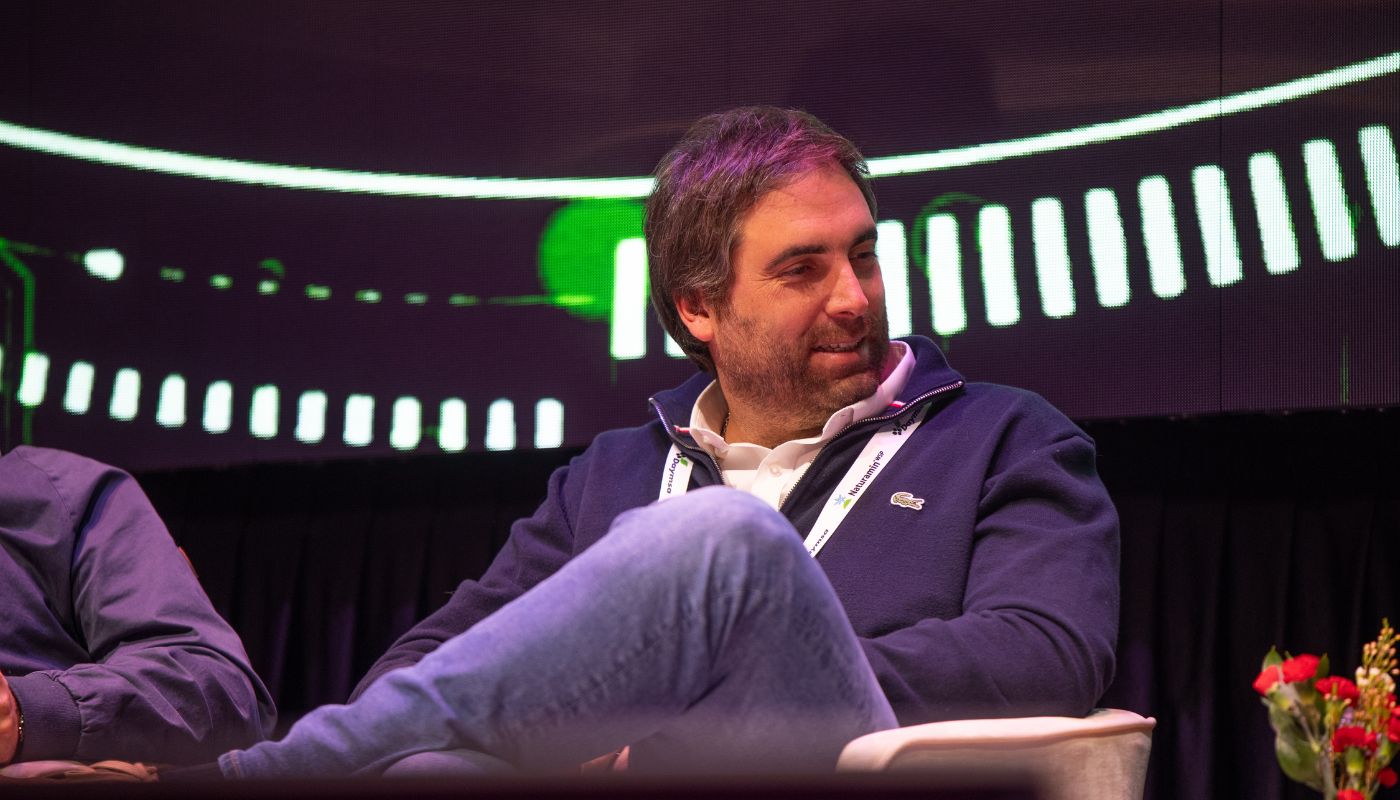
Quality once again emerged as a central theme at CherryTech 2026. At the producers’ forum, “How to Face the Second Half? Analysis from the Producer’s Perspective,” agronomist Ignacio Lavandero emphasized that the industry must move beyond partial views and advance toward a more comprehensive definition of what it means to produce premium fruit. For the specialist, discussing quality involves much more than evaluating size or firmness. “It also includes condition, pedicel hydration, green pedicels, but the most important thing is that the fruit is edible,” he stated.
In that regard, he warned that a fruit can meet traditional commercial parameters and still fall short in the consumer experience. “If it has size and firmness, but doesn’t have sufficient soluble solids or a good sugar-acidity ratio, it won’t be edible,” he explained, adding that one of the major challenges lies in better understanding the physiological evolution of the fruit during post-harvest, an area where, in his opinion, there is still ample room for technical improvement.
Along with this, he proposed moving towards the formation of a specialized technical committee for cherries, capable of establishing clear and agreed-upon criteria to guide producers. “We need a body that can tell us what factors truly guarantee the quality we all want,” he stated.
Ignacio Lavandero also valued the space for dialogue created at CherryTech, emphasizing that the first step forward is to open honest discussions within the sector. “We often agree, but when it comes time to make decisions, it’s very difficult,” he stressed.
Regarding the current state of the industry, he acknowledged that one of the most complex decisions for producers is deciding whether to maintain an orchard or remove it. “Uprooting an orchard is very difficult because there are many emotions involved. Farmers don’t like to uproot; we like to plant,” he commented. Despite this, he expressed optimism about the future of the sector, maintaining that Chile has the information, technology, and high-level expertise to face the challenges. “The data is there. It’s a matter of reaching an agreement,” he concluded.
You can read the full interview here.