
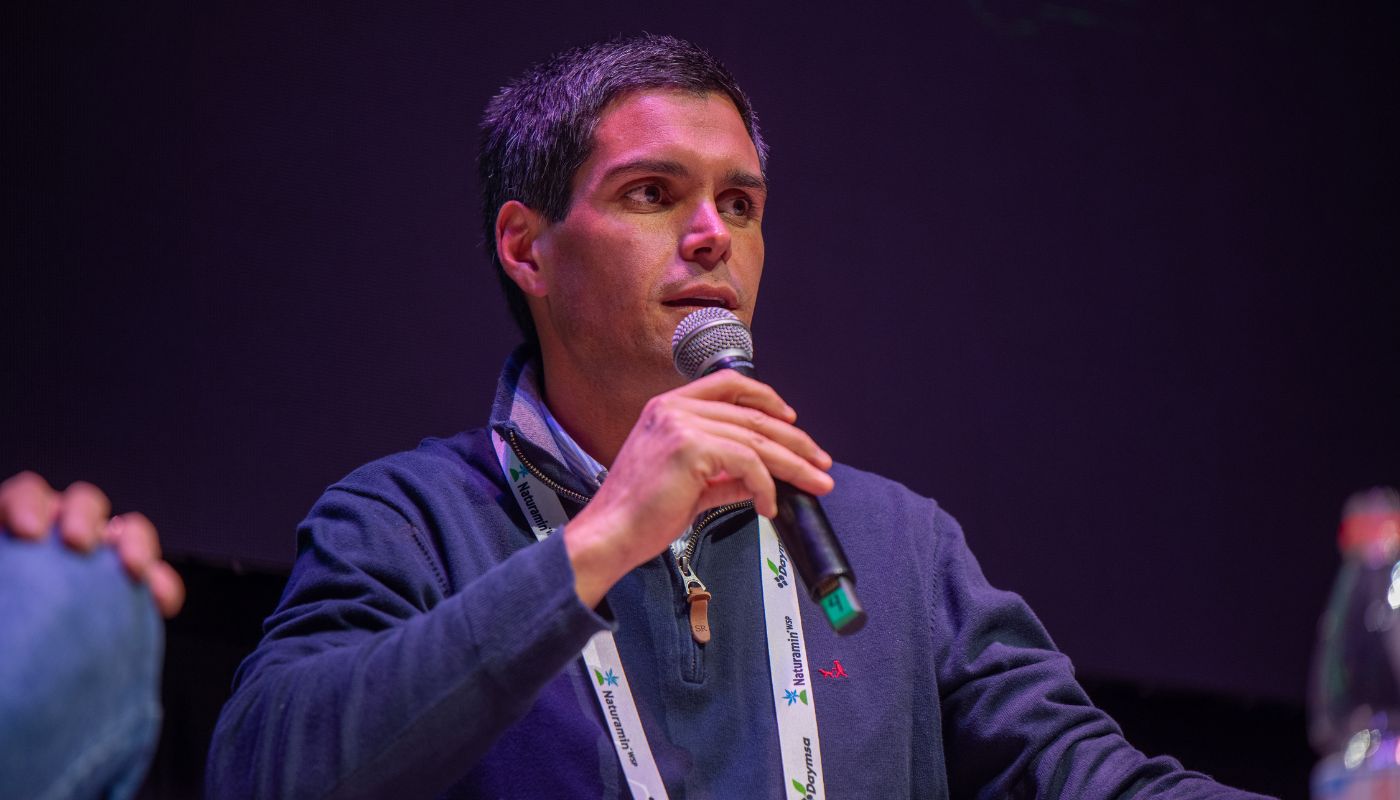
Cherry quality remains a major point of discussion in the industry, but today the challenge is no longer solely about producing firm, good-sized fruit. For Juan Puntí, the new standard demands a shift in perspective: developing the fruit with the end consumer in mind, emphasizing that the challenge lies in balancing flavor, condition, freshness, and profitability.
During his participation in the producers’ forum at this fourth edition of CherryTech, the agronomist stated that the industry has made significant progress in quality in recent years, thanks to improvements in agronomic management, technical advice, and professionalization of production. “It’s not that the fruit is bad. On the contrary. We have improved firmness and productivity. But there is still a gap we must close,” he affirmed.
In his opinion, the main change must be conceptual: stop evaluating the fruit only upon arrival at the packing facility or the market, and start considering its performance in the actual consumption experience. “We have to think about the cherry that arrives in the consumer’s refrigerator and will be consumed two or three days later.” “That’s where quality is truly defined,” he explained.
Following this logic, Puntí highlighted four key variables that should guide the industry’s technical work: firmness, flavor, condition, and freshness. The challenge, he said, lies in combining them in a single equation.
Another critical point addressed was cost control amidst complex campaigns. After two difficult seasons in terms of returns, Juan Puntí warned about “misguided savings,” decisions that reduce expenses in the short term but compromise the final quality. In that sense, he insisted that efficiency doesn’t necessarily mean spending less, but rather executing better.
Finally, the Country Manager for Cherries and Diversified Products in Chile at Exportadora Prize addressed the need to generate common criteria to move toward a premium cherry, asserting that the industry’s great challenge is to align itself around a shared objective, working under a single vision.
You can read the full interview here.