
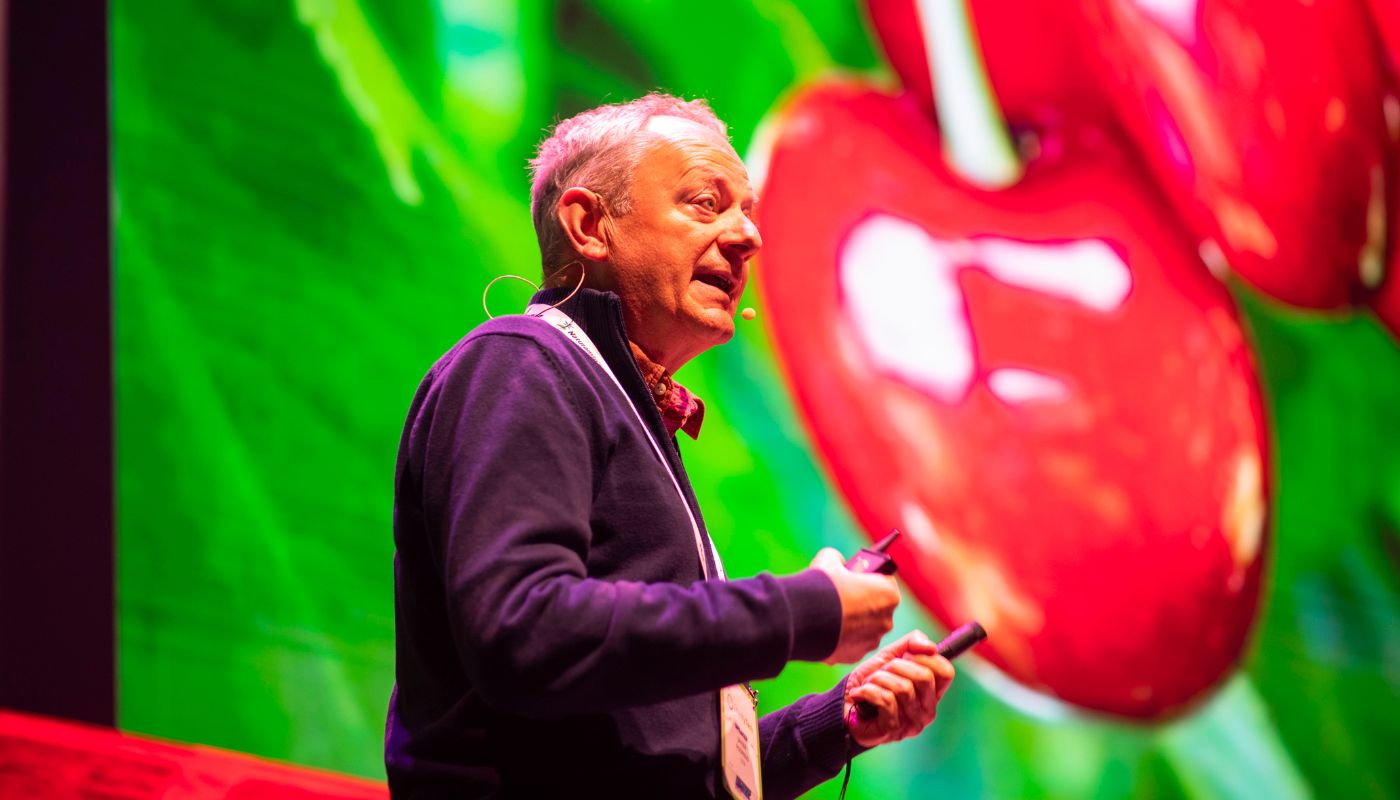
The advance of climate change is redefining the productive limits of cherry trees. This was the point made by Javier Rodrigo during his master class at the conference entitled “Physiology of Fruit Set in Cherry Trees: Mechanisms, Factors, and Determinants of Sustainable and Profitable Production,” where he addressed the delicate balance between pollination, fruit set, and chilling accumulation.
The specialist explained that cherry production begins long before fruit development: it starts in the flower and its capacity to be properly pollinated and fertilized. In this context, he emphasized that the presence of compatible pollen and pollinating insects is essential to ensure embryo formation, a prerequisite for the fruit to begin its development.
Javier Rodrigo maintained that one of the main current challenges is the decrease in winter chilling, a phenomenon that is directly affecting flowering in varieties with high chilling requirements. He warned that when a tree does not meet its chilling needs, flowering becomes irregular, the fruit set percentage decreases, and production problems increase.
The situation becomes even more complex due to the expansion of cultivation into warmer regions in search of earlier harvests and better commercial returns. Faced with this scenario, the Spanish researcher was clear: future production will depend on the correct varietal selection and climate adaptation strategies that allow for sustained yields and quality.
We invite you to read the full interview here.